It begins with a walk...
As an artist interested deeply in wildlife and the outdoors I carve hiking sticks and other folk art in designs inspired by the flora and fauna I see on country walks.

On a walk
by Ploughman Wood
I hand carve my work using a mixture of new and traditional tools and methods. I employ techniques and work up designs to fit the texture and shape of the wood in hand typically using craftsman's wood stains for colour. I complete my carvings with fine durable materials and finish my sticks with beeswax polish for a natural tactile feel. I aim always to work with the wood's natural beauty and retain elements of its character.
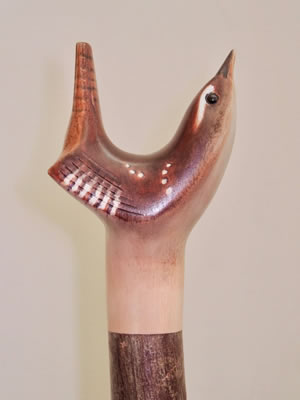
A carved wren thumbstick
The wooden shafts I use for my sticks are gathered in November through February, the UK's traditional coppicing season. After harvesting, the wood is stored carefully and allowed to dry. It takes between 6 months and two years before the sticks are ready to be worked.
Today I include my artist mark on all sticks, incorporated to the rear of the carving.

Artist mark on
the shaft of some of my early sticks
While most of the materials I use are seasonal coppice products, for some designs I use timber cut from my own copse or FSC approved timber from UK suppliers.
In any given year I typically make no more than 30 sticks. Each of my carvings is guided by constantly refreshed source materials. In this, everything I make is both unique, including where carving a subject many times. My approach to making is that of a traditional sculptor - I 'block out' a basic shape using a saw and course carving tools, then paying close attention to my subject, hand carve the timber to a fine finish. The final work possesses both the essential gist of the subject and its particular characteristic detail.
Stick design

Sketch of wren used for
thumbstick design
Some of my sticks are free carved without reference to sketches or drawings. These pieces are usually carved in wood with bold figure and shape that strongly suggests the subject and form. Examples include my harvest mouse and wolf designs. In other cases while still paying attention to the inherent qualities of the wood I employ drawing and painting to arrive at a design. My studies combine memories of walks and things seen; sketches made in the field and photographic records.

Design
sketch for wren thumbstick
How tall a stick?
Hiking staffs, thumbsticks, wading staffs and traditional farmers crooks are all distinct from 'walking sticks' being longer by several inches. While a walking stick is usually of a length that places its handle at or below hip height, staffs, crooks and thumb sticks usually stand with their grip between elbow and chest height. The exact height you prefer is personal. If not familiar, perhaps buying your first staff, to obtain a comfortable height try following this procedure: Put on your walking boots or shoes. Take a bean pole or broom, even a garden hoe and hold as if a hiking staff. With this stick 'substitute', adjust your grip until you find it most comfortable. Measure to the floor from the top of your grip.

If you want your staff the "recommended" or "standard" height, follow the same procedure as described in the previous paragraph but make sure your forearm and upper arm form a right angle when you are holding the stick. Then take the measurement from floor to top of the hand grip.

A wading staff might need to be longer depending on the river or lake bed. If you are buying a thumbstick or other design and wish to rest binoculars on it then the very top of the stick needs to end close to eye level - please contact me with that measurement and clear indication you intend to use the stick that way. (My bird design thumbsticks are not suited to this application unless supplied with a replacement grip for the purpose. This can be provided on request.)